Have you heard people say that you snore loudly or gasp for air during the night? Do you wake up feeling exhausted despite a full night's sleep?
Have you heard people say that you snore loudly or gasp for air during the night? Do you wake up feeling exhausted despite a full night's sleep? The answer to your sleep struggles might be hiding in plain sight reflected back at you in the mirror every morning.
Sleep apnea, particularly obstructive sleep apnea (OSA), affects millions of people worldwide, yet many cases go undiagnosed for years. What is concerning is that you might be suffering night after night without even realizing what's wrong. While a sleep study remains the gold standard for diagnosis, emerging research reveals that certain facial characteristics can serve as important warning signs.
Understanding these features could be your wake-up call, quite literally, to finally get the restful sleep you deserve and protect your long-term health.
What is Obstructive Sleep Apnea?
Obstructive sleep apnea (OSA) is a common and potentially serious sleep disorder in which breathing repeatedly stops and starts during sleep because the upper airway becomes partially or completely blocked.
These repeated disruptions fragment sleep and lower oxygen levels, which over time can contribute to major health complications such as cardiovascular disease, type 2 diabetes, and cognitive impairment.
A key reason some people are more prone to OSA is anatomy. Craniofacial structure i.e., the size, shape, and alignment of the facial skeleton and jaws strongly influence upper
airway size. It also affects how easily the airway collapses during sleep. This risk can be higher when soft tissue around the face and neck further narrows into that space.
The airway space is shaped by both the skeletal framework and the tissues around it. Because of this, OSA risk often shows up in recognizable facial patterns. That’s why certain facial features are consistently associated with disorder.
According to the research published in Dental Press Journal of Orthodontics on Facial Morphology and Obstructive Sleep Apnea (OSA), there is a strong relationship between the relationship between facial morphological patterns (I, II, III, Long Face and Short Face) as well as facial types (brachyfacial, mesofacial and dolichofacial) and obstructive sleep apnea (OSA).
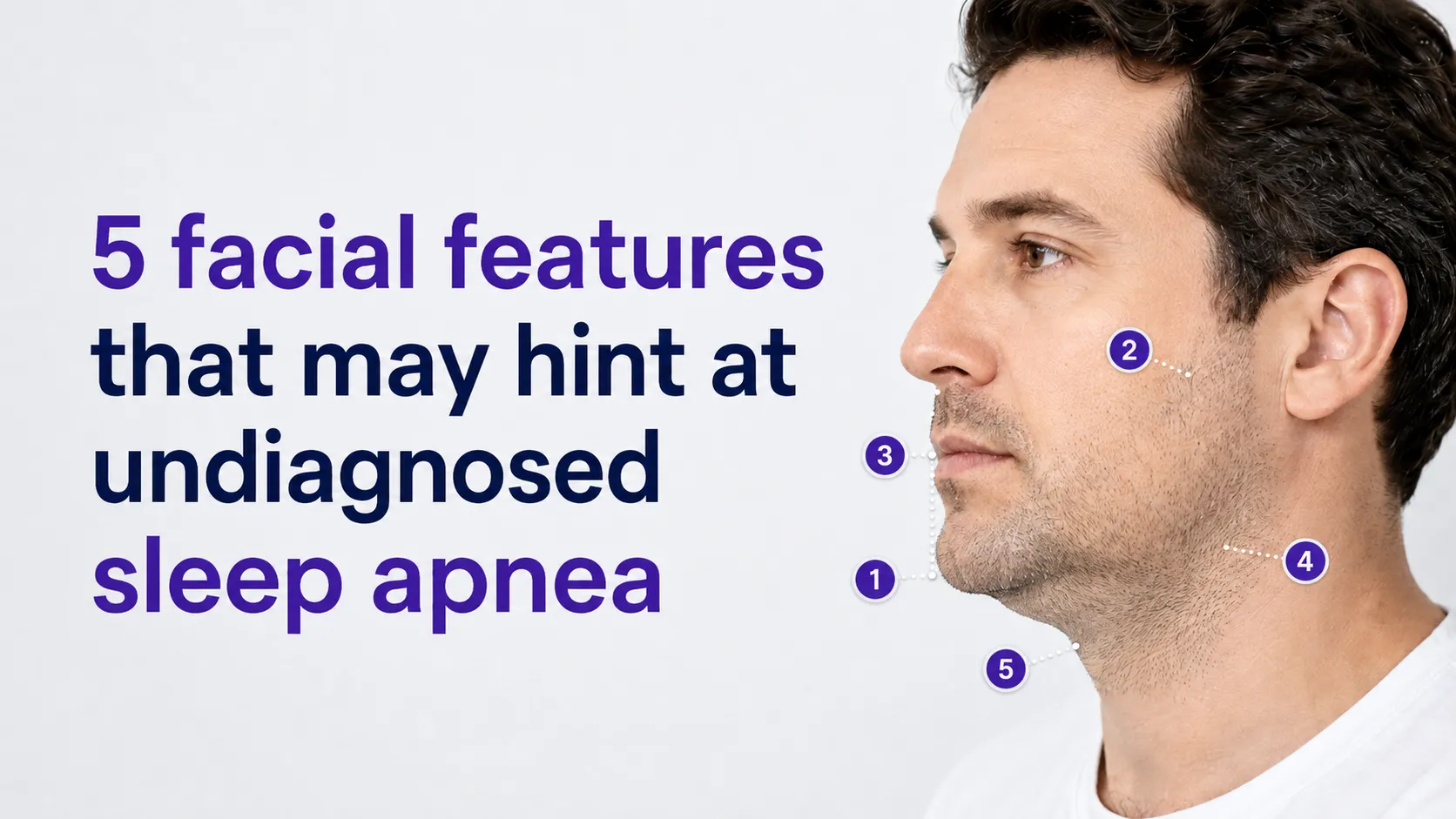
This relationship isn’t just theoretical, it translates into visible, measurable facial characteristics that correlate with airway obstruction. Below are five facial features that research repeatedly links with sleep apnea risk:
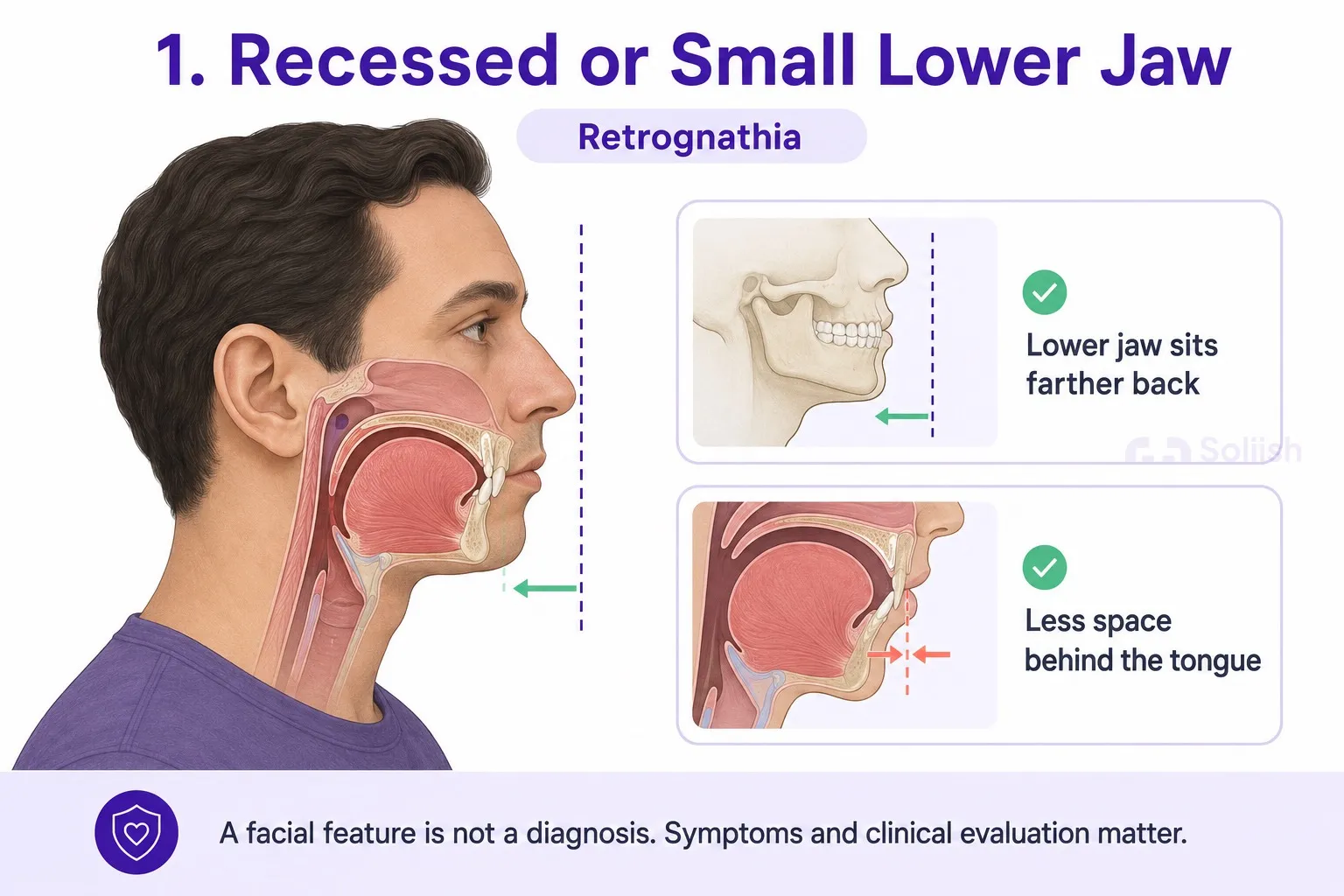
1. Recessed or small lower jaw (Retrognathia)
One of the most well-established physical markers for sleep apnea is a lower jaw that sits further back than average. When the jaw is small or retruded, the tongue sits closer to the back of the throat, leaving less room for airflow. During sleep, when muscles relax, the airway becomes much more vulnerable to collapse.
People often describe this appearance as a “weak chin,” but medically, it’s better understood as a structural limitation that narrows the breathing passage.
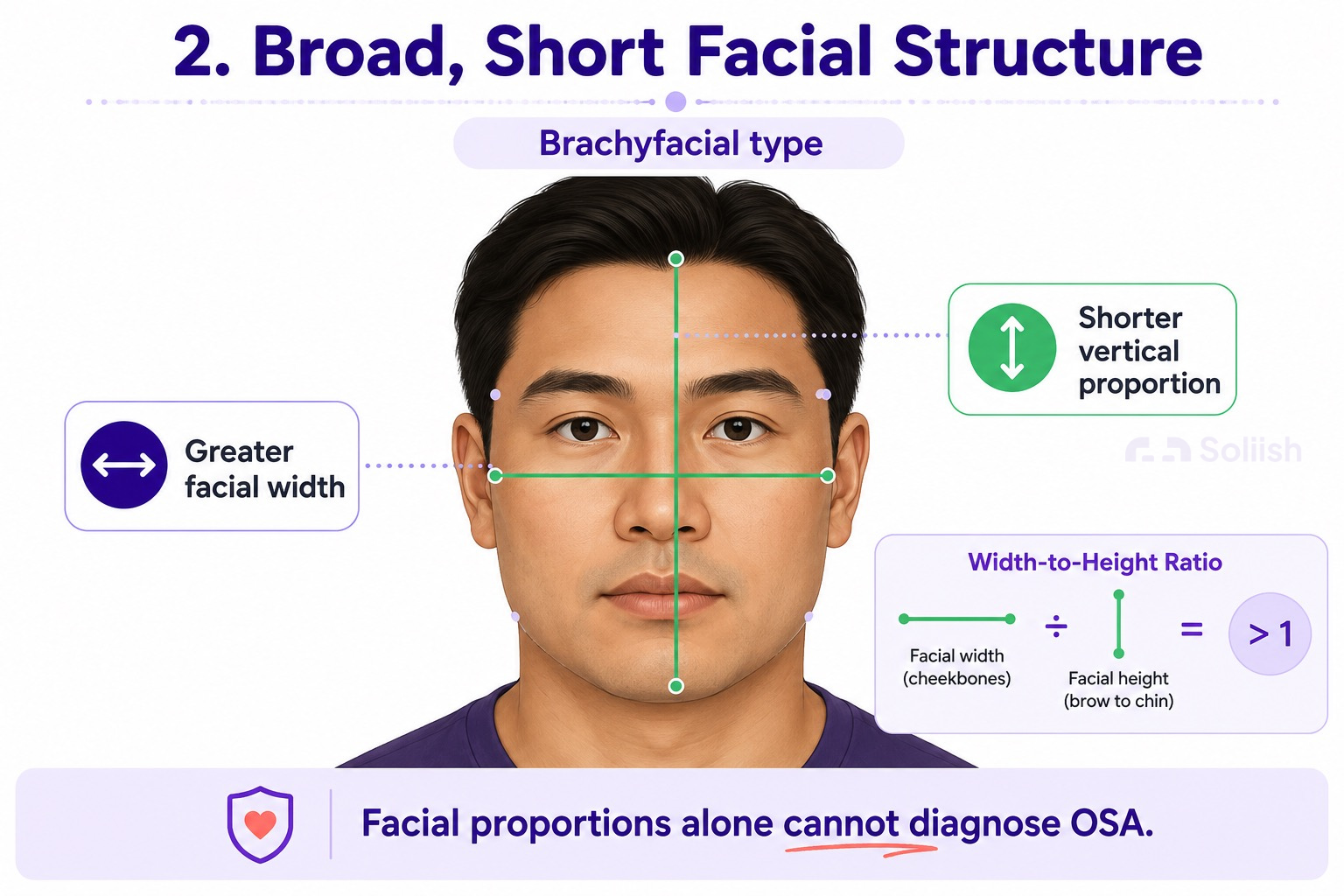
2. Broad, short facial structure (Brachyfacial type)
Facial proportions matter just as much as jaw size. Individuals with a brachyfacial pattern typically a wider, shorter face tend to show higher apnea-hypopnea index (AHI) scores.
Research also finds that people with a Pattern II facial profile (a more convex shape with a receding chin) are more prone to OSA.
On the other hand, those with Pattern III features (a slightly concave profile with a more prominent lower jaw) often have better airway stability and somewhat lower OSA risk.
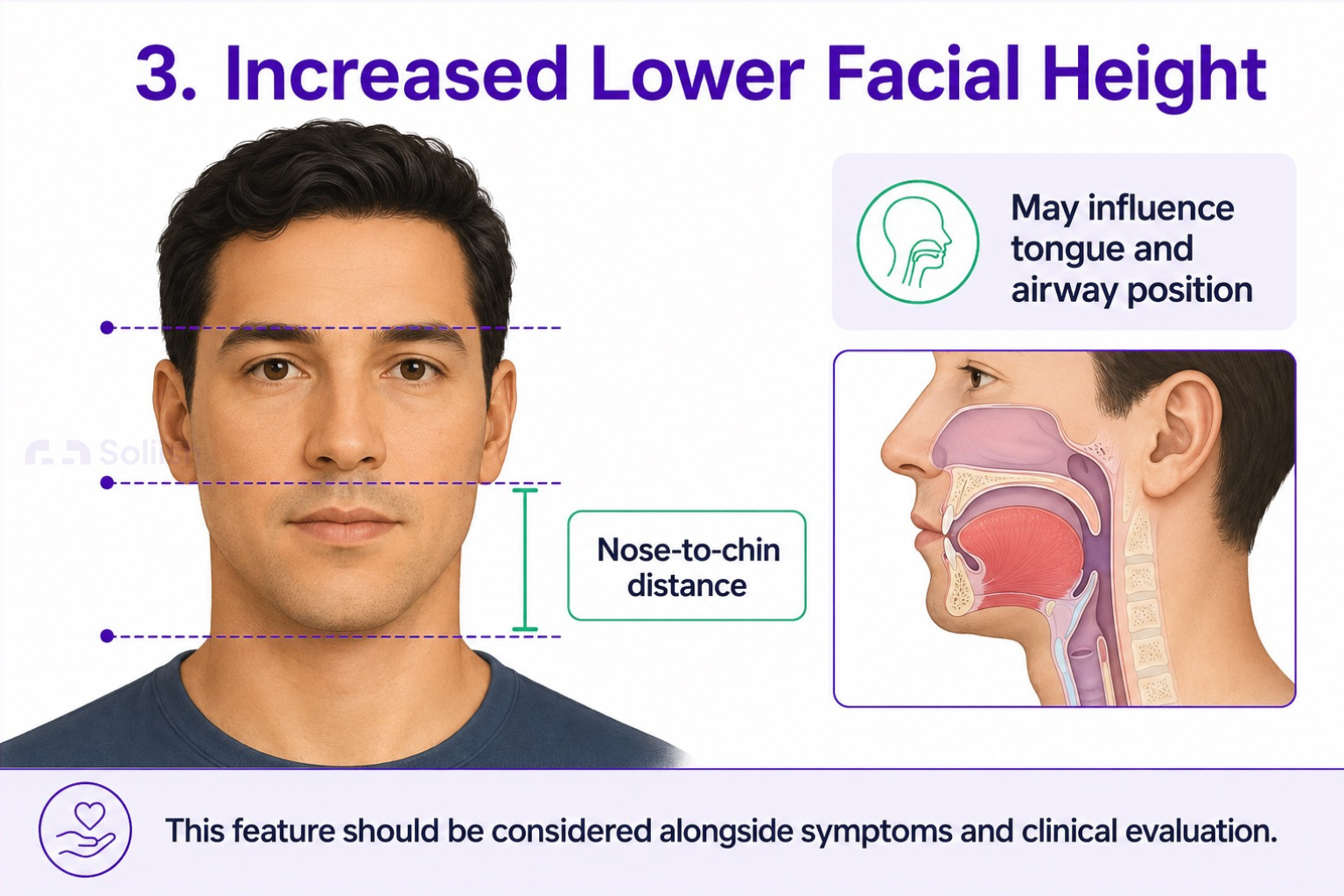
3. Increased lower facial height
A noticeably long lower face - what orthodontists sometimes call “long-face pattern” is another feature commonly seen in people with sleep-disordered breathing. Extra vertical height can change the position of the tongue and surrounding tissues, making the airway more collapsible.
If you’ve been told you have a long facial profile, especially from the nose to the chin, it’s reasonable to consider sleep apnea screening, even if you don’t feel excessively tired.
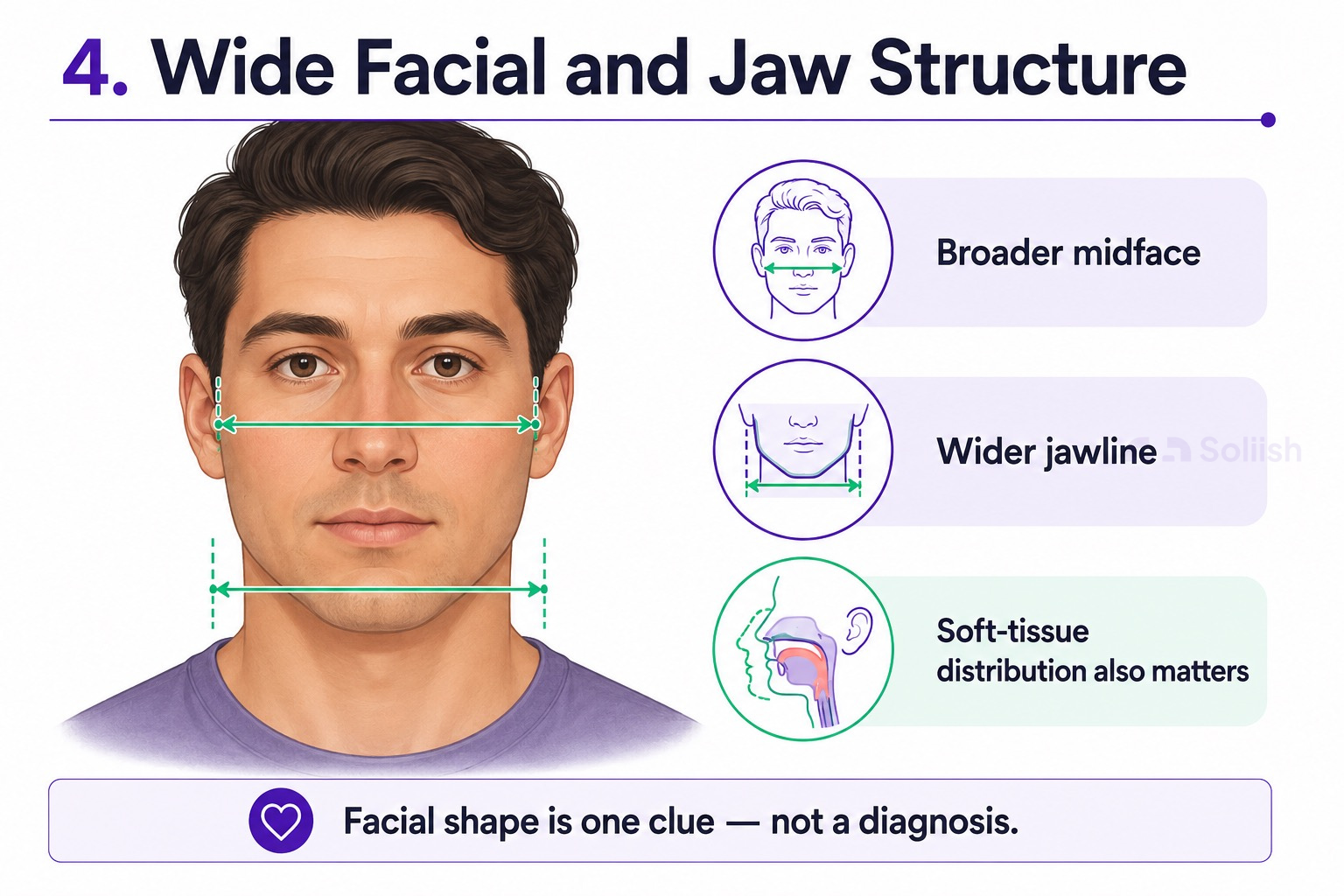
4. Wide facial and jaw structure
In a study published in Journal of Clinical Sleep Medicine (JCSM), your face measurements can predict the likelihood of OSA with 91% accuracy when linear and geodesic craniofacial measurements from 3D photography. Some studies show that a broader face or jaw can also be associated with more severe OSA. This isn’t about bone size alone; it’s about how soft tissue is distributed within that space. Wider facial structures can sometimes accompany increased soft-tissue volume around the airway, an important contributor to collapse during sleep.
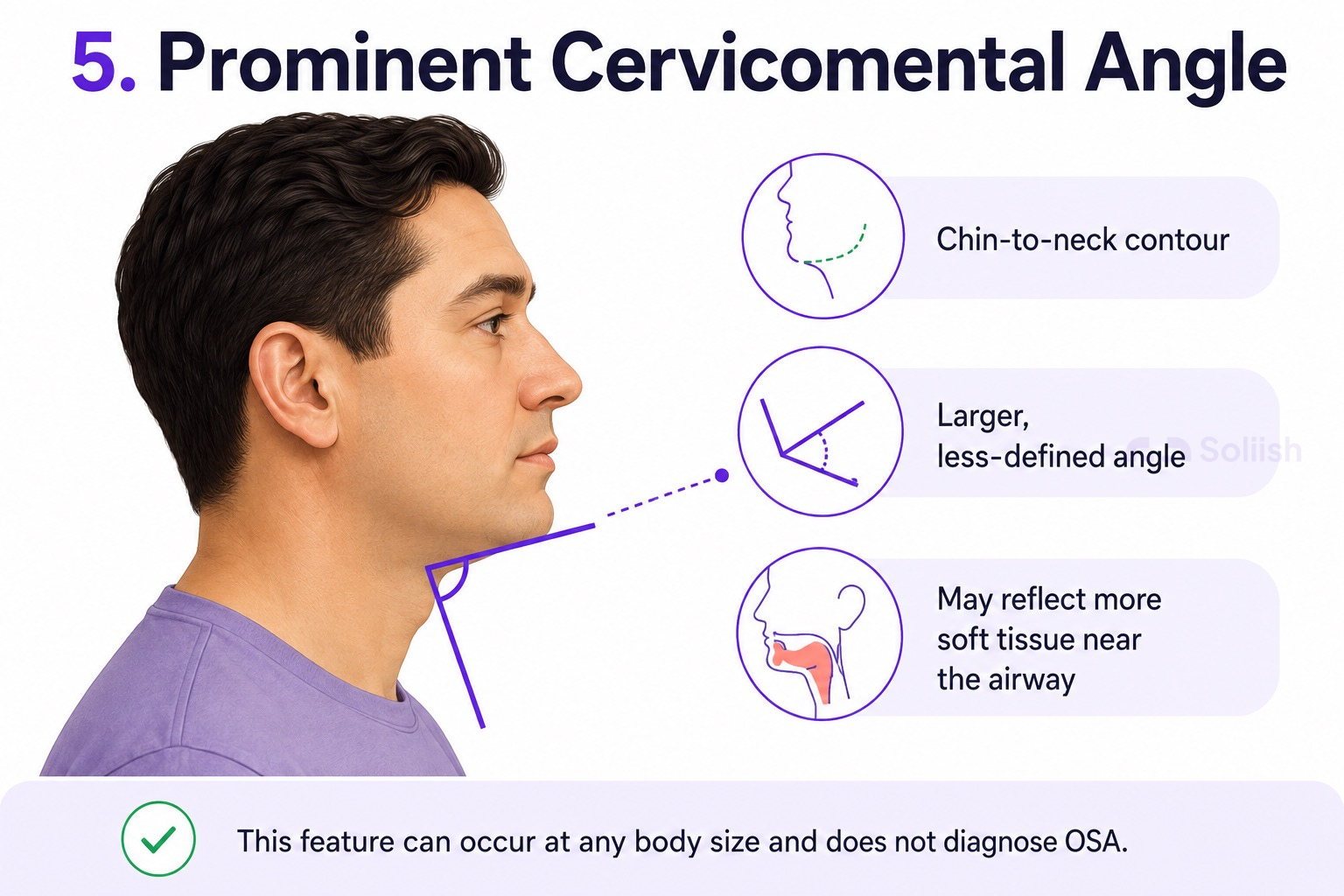
5. Prominent cervicomental angle
The cervicomental angle is just the profile or contour you see when looking at someone from the side specifically, the angle where the chin meets the neck.
Think about it this way: some people have a very defined jawline where there's a clear, sharp angle between the chin and neck. Others have a softer, less defined transition with more fullness in that area. When this angle is larger or less defined creating what looks like a "double chin" appearance even in people who aren't overweight, it's often linked to more severe sleep apnea.
Why? Because this reflects how much soft tissue exists in that space, and that extra tissue can collapse backward and block your airway when you're lying down and your muscles relax during sleep.
Beyond bone structure, other facial and oral features may indicate OSA risk:
- Enlarged tongue or thick tongue base that takes up more space in the mouth
- Narrowed airway visible behind the tongue
- Crowded oral cavity with limited space for the tongue
Chronic, untreated sleep apnea can also create visible changes:
- Dark circles under the eyes
- Puffiness and under-eye bags
- Facial swelling
- Dull, aged-looking skin
These signs result from poor oxygenation, disrupted sleep, and the cardiovascular stress caused by repeated breathing interruptions throughout the night.
Common sleep apnea symptoms include:
- Loud, chronic snoring
- Witnessed breathing pauses during sleep
- Gasping or choking during sleep
- Excessive daytime sleepiness
- Morning headaches
- Difficulty concentrating
- Irritability and mood changes
Your facial structure can offer meaningful clues about your risk for sleep apnea, especially when combined with symptoms like snoring or daytime fatigue. Jaw position, facial proportions, and soft-tissue patterns all influence how easily your airway stays open at night.
At Soliish, we believe in empowering you with knowledge about your health. If you recognize these facial features or experience symptoms of sleep apnea, don't wait. Early diagnosis and treatment can dramatically improve your sleep quality, energy levels, and long-term health outcomes.
1. Capistrano A. et al. Facial Morphology and OSA. Dent Press J Orthod, 2015.
2. Predicting sleep apnea from three-dimensional face photography, JCSM, 2020
3. Flores-Mir C. et al. Facial Features to Predict OSA. Sleep, 2024.
4. Dong Z. et al. Craniofacial Measures and OSA Severity. Healthcare, 2025.
5. O’Brien K. Facial Pattern & OSA — Evidence Review. Orthodontics Blog.
6. Vidigal T.A. et al. Can Photos Predict OSA? J Clin Sleep Med, 2024.
7. Harvard Medical School. Sleep & Health Education #27.
Disclaimer: This article is for informational purposes only and is not a substitute for professional medical advice, diagnosis, or treatment. Always consult with qualified healthcare providers regarding any health concerns or before making any decisions related to your health.