Could a photo of your face reveal whether you're at risk for sleep apnea?
Could a photo of your face reveal whether you're at risk for sleep apnea? According to a growing body of peer-reviewed research and a 2024 meta-analysis published in Sleep and Breathing, the answer is a compelling yes. AI trained on craniofacial photographs has demonstrated a pooled sensitivity of 84.9% and specificity of 71.2% for detecting obstructive sleep apnea (OSA), with deep learning models reaching up to 91% sensitivity.
This article breaks down exactly how AI face scanning for sleep apnea works - the science behind it, what the algorithm is actually looking for in your photo, and why this technology is rapidly becoming one of the most promising screening tools in sleep medicine.
Quick Summary: AI face scan tools analyze the structural features of your face - jaw position, neck geometry, facial proportions to estimate your likelihood of having obstructive sleep apnea. No sleep lab required.
Why your face holds clues about sleep apnea
Obstructive sleep apnea isn't random. At its core, OSA is a structural disorder. The airway collapses repeatedly during sleep because of anatomical factors that physically narrow or compress the upper airway. Those anatomical factors often show up in your facial structure.
Research has identified several craniofacial features consistently associated with elevated OSA risk:
These are not subtle or hidden features. They are measurable in ordinary photographs and that is exactly what AI is trained to find.
Key Research Finding: A 2023 deep learning study found that the eyes, nose, mouth, chin, pre-auricular area, and ears contribute most to OSA detection from facial photos - structures concentrated in the middle and anterior regions of the face.
AI face scanning for sleep apnea is not experimental speculation. It is backed by a rapidly expanding body of clinical literature. Here is a summary of what peer-reviewed research has found:
These are not marginal improvements. In several studies, AI face scanning matched or exceeded the predictive accuracy of established questionnaire tools like the STOP-BANG and Epworth Sleepiness Scale - tools that have been the clinical standard for decades.
AI-powered face scan screening is particularly valuable for several groups:
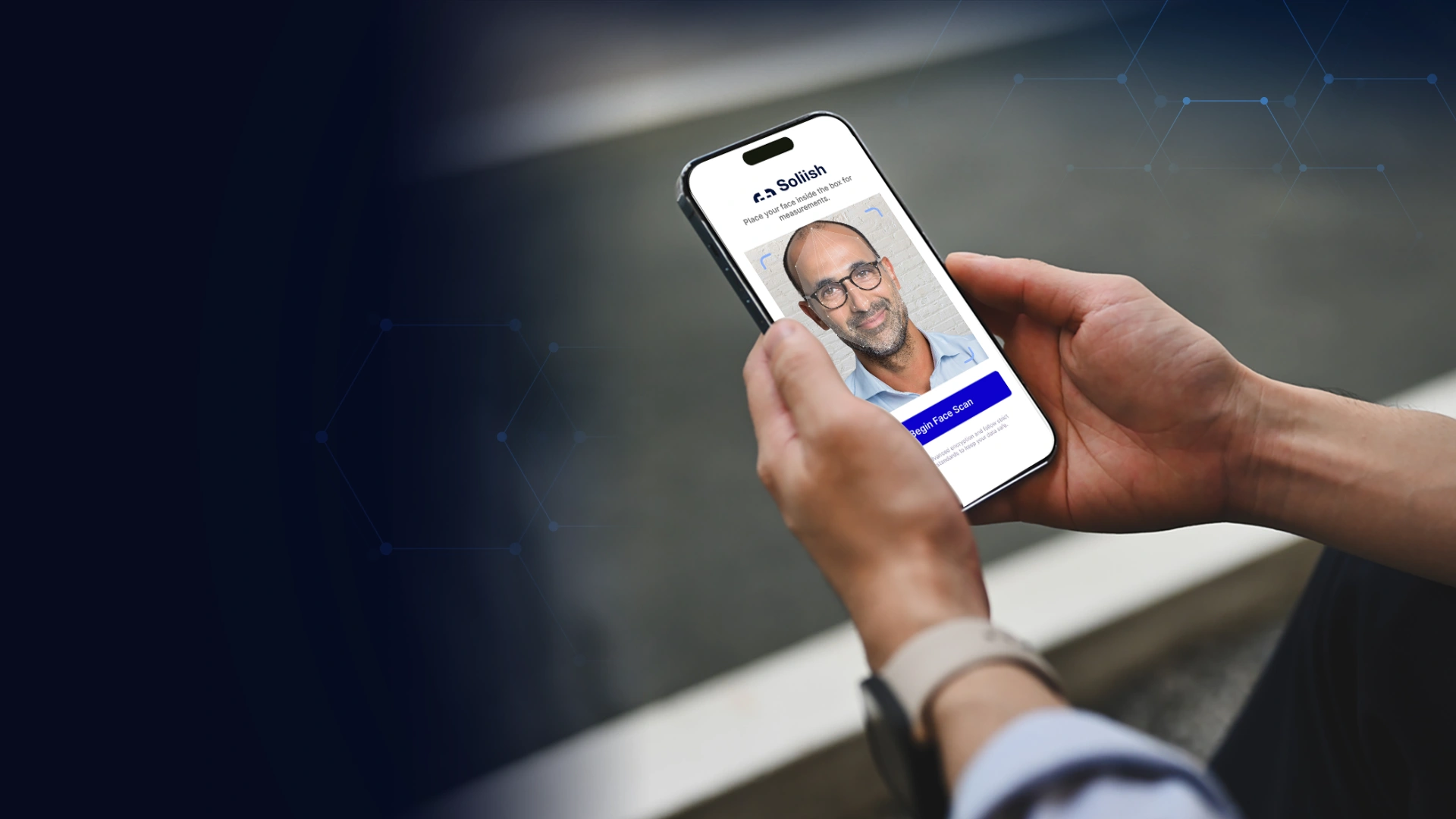
FaceX is Soliish's proprietary AI face scan tool built specifically for sleep apnea risk detection. It brings together the craniofacial analysis science described above into a seamless, clinician-grade screening experience that requires nothing more than a front-facing camera.
Key features of FaceX:
FaceX is designed as a front-line triage tool - not a replacement for clinical diagnosis, but a powerful first step that identifies who needs further evaluation and who can be reassured without burdening sleep labs or requiring overnight testing.
The science is clear: your face carries measurable, objective information about your sleep apnea risk. AI face scanning technology has reached a level of accuracy in multiple peer-reviewed studies that makes it a clinically credible and practically transformative screening tool.
For the billions of people worldwide with undiagnosed obstructive sleep apnea, a 30-second selfie could be the difference between years of undetected disease and timely, life-changing care.
1. Gao EY, et al. (2024). Artificial intelligence facial recognition of obstructive sleep apnea: a Bayesian meta-analysis. Sleep and Breathing, 29(1):36. doi: 10.1007/s11325-024-03173-3
2. He S, et al. (2023). Deep learning technique to detect craniofacial anatomical abnormalities concentrated on middle and anterior of face in patients with sleep apnea. Sleep Medicine, 112:12-20.
3. Park JY, et al. (2025). A novel machine learning model for screening the risk of obstructive sleep apnea using craniofacial photography with questionnaires. Journal of Clinical Sleep Medicine, 21(5):843-854. doi: 10.5664/jcsm.11560
4. Su Z, et al. (2023). Predicting obstructive sleep apnea severity from craniofacial images using ensemble machine learning models. Proc SPIE Int Soc Opt Eng, 12465:124652P. doi: 10.1117/12.2654353
5. Kim MJ, et al. (2023). Screening obstructive sleep apnea patients via deep learning of knowledge distillation in the lateral cephalogram. Scientific Reports, 13:17788. doi: 10.1038/s41598-023-42880-x
6. Giorgi L, et al. (2025). Advancements in Obstructive Sleep Apnea Diagnosis and Screening Through Artificial Intelligence: A Systematic Review. Healthcare, 13(2):181. doi: 10.3390/healthcare13020181