Sleep apnea is diagnosed through sleep testing and clinical interpretation.
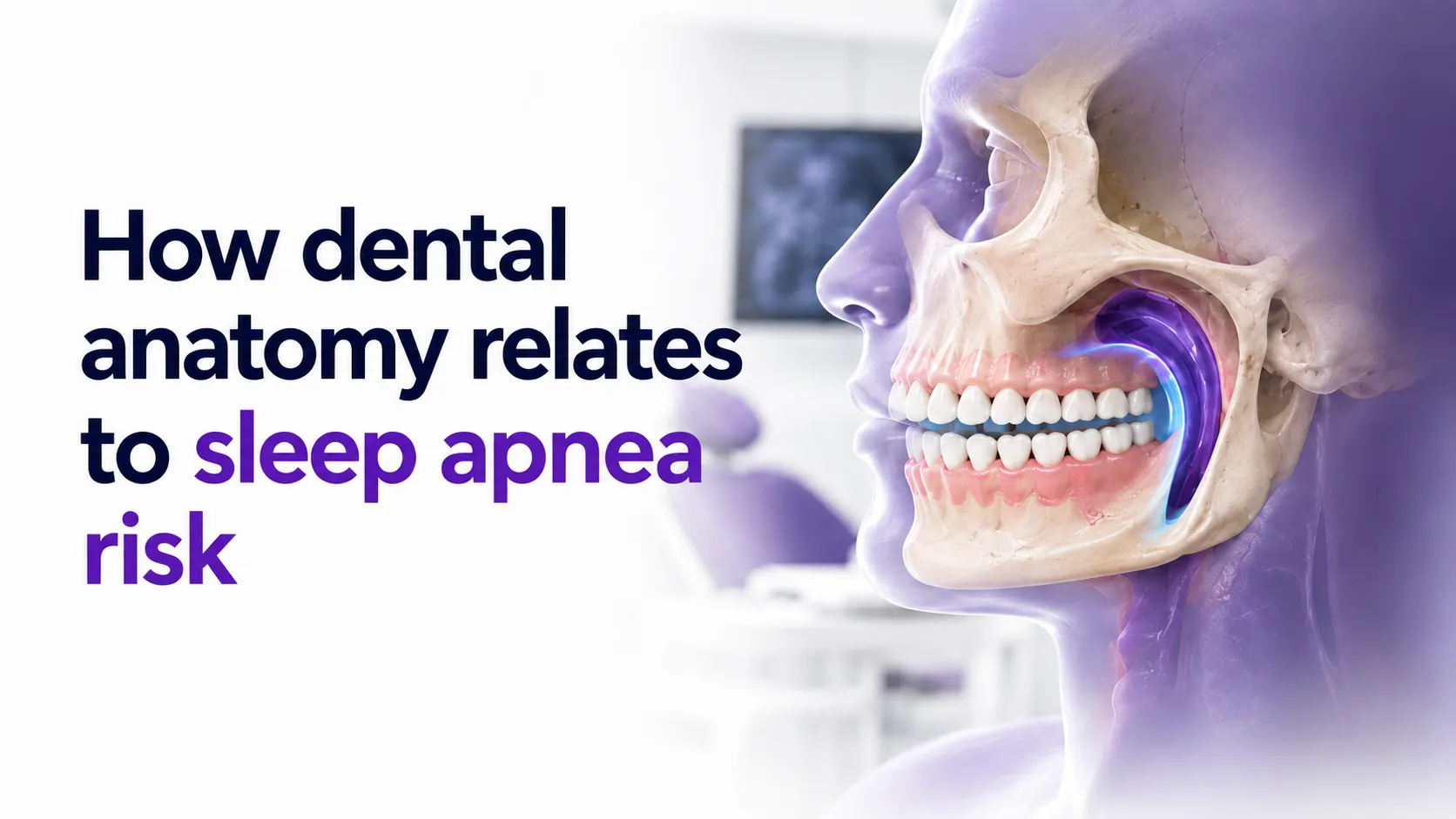
Sleep apnea is diagnosed through sleep testing and clinical interpretation. But the likelihood that airway obstruction occurs during sleep is shaped, in part, by physical structure.
Certain features of the jaws, oral cavity, and surrounding soft tissues influence how much space the airway has when muscle tone decreases at night. These features don’t determine whether someone has sleep apnea, but they can increase or decrease vulnerability.
Dentists work with these structures every day. Not to diagnose sleep disorders—but to assess function, stability, and long-term oral health. That’s why dental anatomy often provides useful context when sleep-related symptoms are raised.
This article focuses on the specific anatomical factors dentists commonly observe, and how those features relate to sleep apnea risk not diagnosis.
Why structure influences airway behavior during sleep
When a person is awake, muscle tone helps keep the upper airway open. During sleep, that tone naturally decreases. Whether the airway remains stable depends on how much space is available and how surrounding structures interact with gravity and relaxation.
Small differences in skeletal relationships or oral space can matter more at night than they do during the day. These differences don’t cause sleep apnea on their own, but they can lower the margin for airway collapse especially when combined with age, sleep position, or other physiological factors.
Understanding this helps explain why two patients with similar symptoms may have very different sleep study results, and why anatomy is one piece of a larger risk picture.
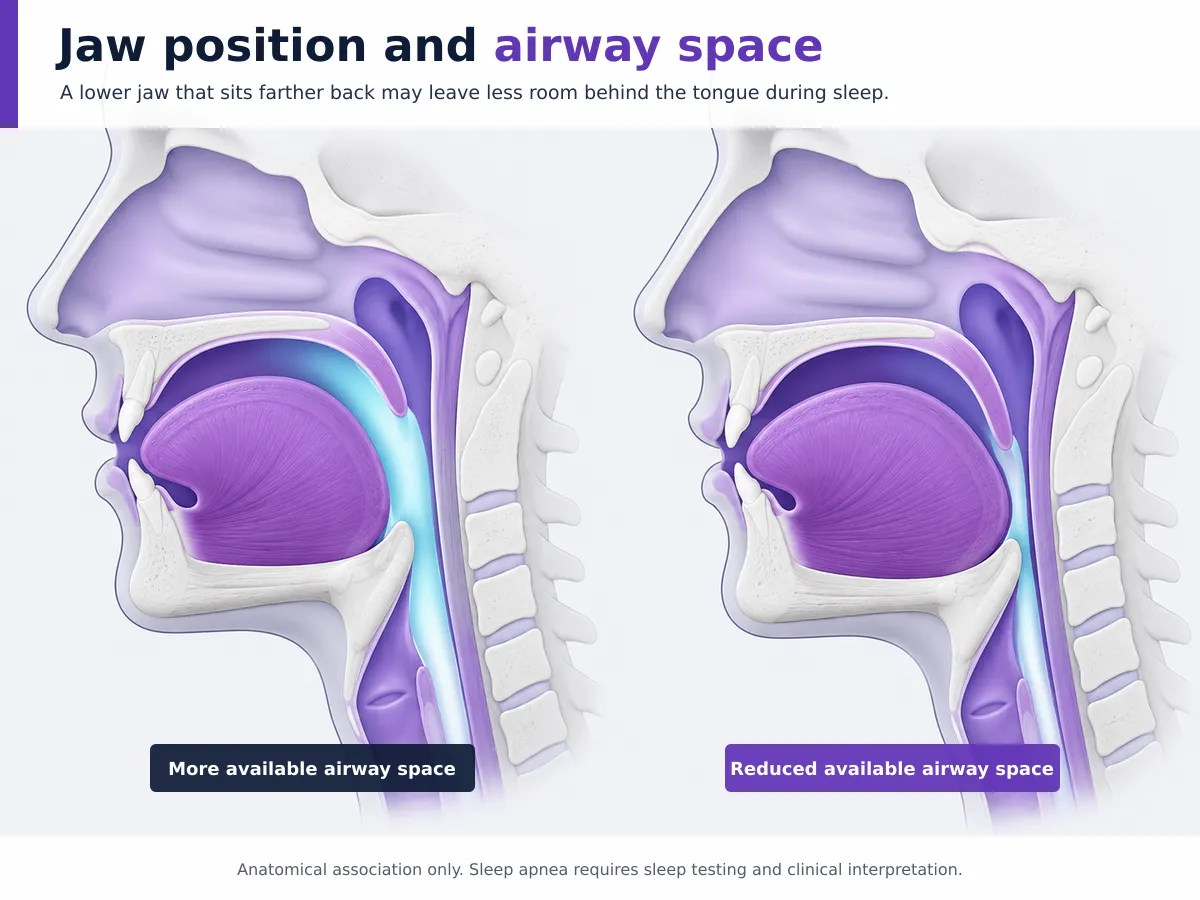
The position of the jaws influences how much room exists behind the tongue and soft tissues.
When the lower jaw sits further back relative to the upper jaw, the tongue may also rest closer to the back of the airway. During sleep, when muscle tone relaxes, this can reduce the space available for airflow.
Dentists routinely evaluate jaw relationships when considering bite function, orthodontic history, or restorative planning. Those same observations can provide context when sleep-related symptoms are mentioned.
Not every patient with a retruded jaw has sleep apnea. But certain skeletal patterns are associated with increased vulnerability to airway narrowing during sleep, especially when combined with other factors.
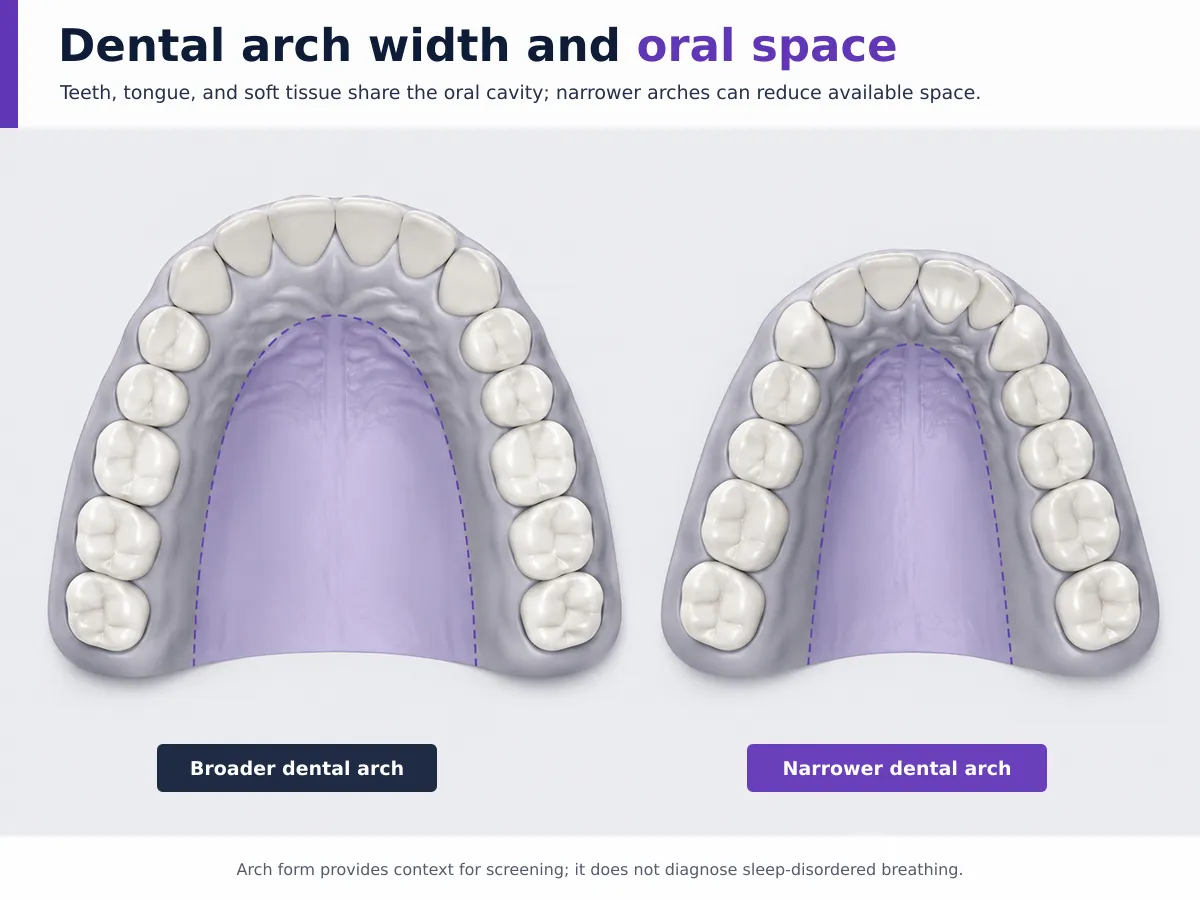
The oral cavity is a shared space. Teeth, tongue, and soft tissues all occupy it.
When the tongue takes up a relatively large portion of that space, or when the dental arches are narrow, there may be less room for soft tissues to reposition comfortably during sleep. In a waking state, muscle tone helps compensate. At night, that compensation diminishes.
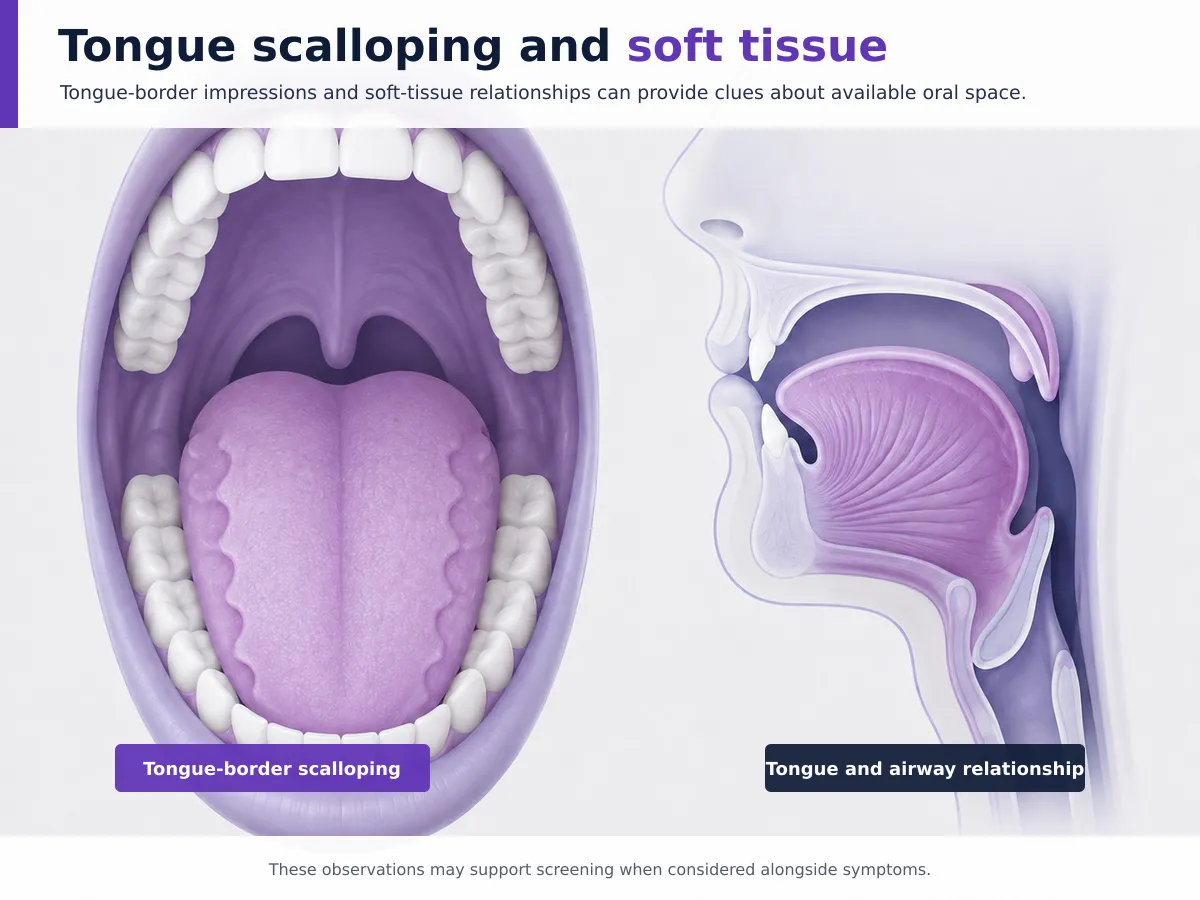
Dentists often recognize limited oral space through crowded teeth, narrow arches, or scalloping along the tongue borders. These findings are not diagnostic. They do, however, help explain why certain patients may experience airway compromise once asleep.
Soft tissues such as the tongue, soft palate, and surrounding musculature play a central role in airway stability.
Dentists don’t evaluate soft tissues for sleep apnea directly, but they do observe tone, posture, and interaction with teeth and appliances. Over time, patterns may emerge: wear consistent with bruxism, signs of muscular compensation, or complaints related to jaw or facial tension.
These observations don’t confirm sleep-disordered breathing. They can, however, add context when patients report non-specific symptoms like poor sleep quality or daytime fatigue.
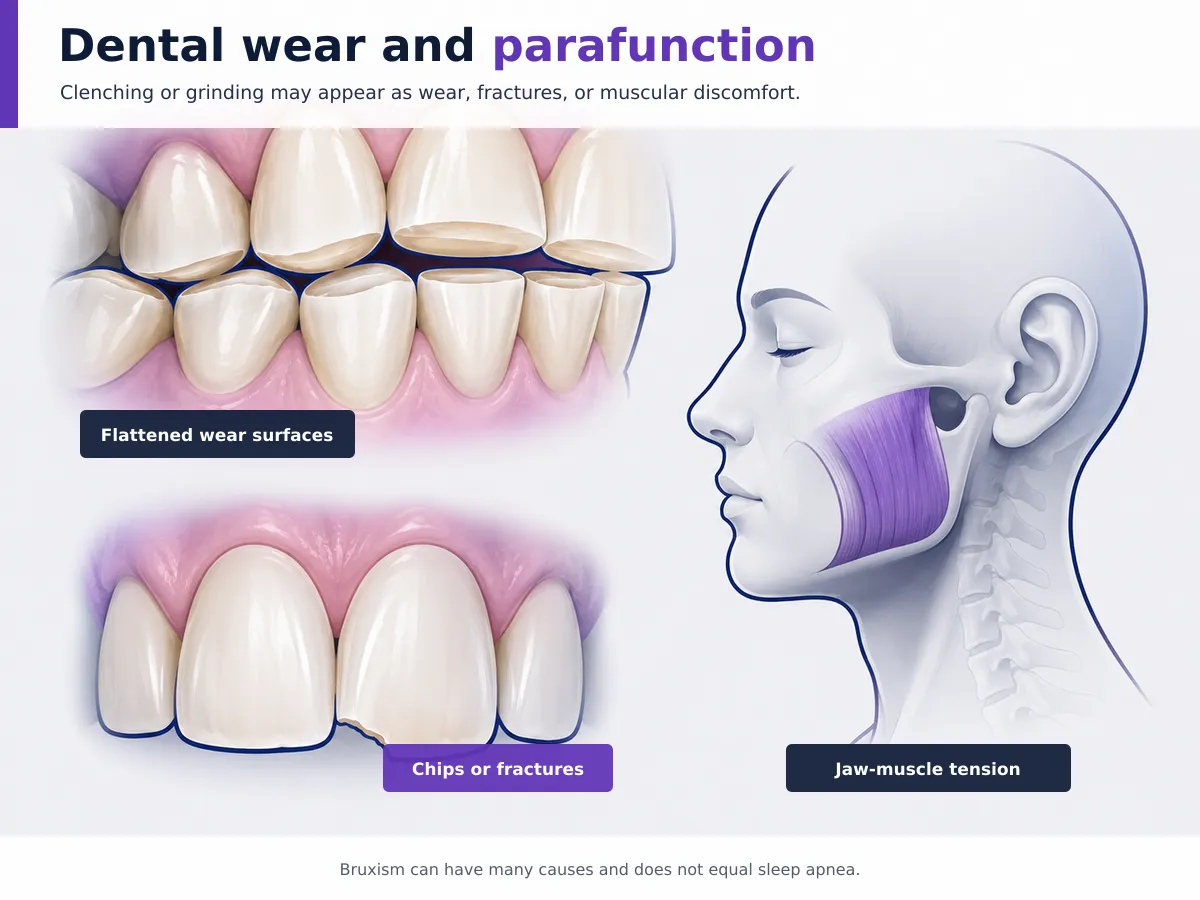
Bruxism and other parafunctional habits are common topics in dentistry. While they have multiple causes, they sometimes coexist with disrupted sleep.
Repeated micro-arousals during the night can increase muscle activity, including jaw clenching or grinding. From a dental perspective, this shows up as wear, fractures, or muscular discomfort.
It’s important to be clear: bruxism does not equal sleep apnea. Many patients grind their teeth without having a sleep disorder. Still, when bruxism appears alongside symptoms like snoring or unrefreshing sleep, it may be reasonable to consider sleep apnea risk as part of a broader picture.
Dental anatomy can influence airway behavior, but anatomy alone cannot determine whether sleep apnea is present. Breathing patterns, oxygen levels, and sleep architecture must be measured during sleep to make a diagnosis.
This is why screening is not diagnosis.
In dental practice, anatomy-related observations serve a different purpose. They help identify when a patient’s symptoms and physical features may warrant further medical evaluation. Screening tools—whether questionnaires or structured assessments—help standardize that judgment and guide next steps responsibly.
When risk appears elevated, patients are referred for medical evaluation, where diagnosis and treatment decisions are made by licensed clinicians.
Traditional screening often relies on factors such as body weight or self-reported sleepiness. While useful, these approaches don’t capture every at-risk patient.
Some individuals with sleep apnea are not overweight. Some don’t perceive themselves as excessively sleepy. In these cases, structural contributors to airway narrowing may play a larger role.
Dentistry doesn’t replace medical screening, it complements it by bringing anatomy into the conversation earlier, especially for patients whose risk might otherwise be overlooked.
Understanding how dental anatomy relates to sleep apnea risk doesn’t expand a dentist’s clinical responsibility. It clarifies it.
Dentists:
Sleep Physicians:
This division keeps care appropriate, coordinated, and patient-centered.
Dental anatomy plays a meaningful role in sleep apnea risk, particularly in how the airway behaves during sleep. Dentists are already familiar with the structures involved—not because they practice sleep medicine, but because those structures matter in everyday dental care.
Recognizing anatomy-informed risk allows dentists to screen thoughtfully and guide patients toward proper evaluation, without diagnosing or treating sleep apnea independently.